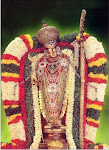
Swatantro Bhagawan Vishnuh !!!
Tattva Sankhyana is a very unique grantha of SriMadacharya (part of Sarvamoola). It brings out the complete supremacy of Sri Vishnu in a very unique way.
The first shloka classifies the entire beings/things into two categories Swatantra ( Independent ) and Aswatantra ( Dependent )
Definition of Tattva
Pramiti vishayai iti avarta, tattva anavarat Pramiti vishayai iti avarta
Swatantra-aswatantram cha dvividham tatvamishyate
Swatantro Bhagawan Vishnuh bhava-bhavo dvidhetarata`|| TS – 1
Lakshmipati padambhojayugam natvaa gururopi
karishye tatvasankhyananavyakhyanam naativistaram` || Mangalacharana shloka of Teeka by TeekAcharyaru
Swatantro Bhagawan Vishnuh !!!
Sri Vishnu is Swantantra !!!
Teekacharya defines swatantra as
swaroopa-pramiti-pravrutti-lakshana-satta-traivide-paranapakshe-swatantram
Swaroopa – existance/roopa
pramiti – knowledge
pravrutti – behaviour/action
One who is not dependent on anyone for their existance, knowledge and action at any point of time is considered as truly independent.
All through shastras Sri Hari alone exhibits this complete independence.
Swaroopa – Sri Krishna is born with complete clothes, jewellery and Shanka, Chakra, Padma and Gada
Sri Narasimha appeared from a pillar ( non living thing giving birth to living )
Sri Narasimha roopa itself shows non binding to prakriti.
Sri Trivikrama shows roopa that prevades whole brahmanda
Sri Krishna shows infinite Vishwaroopa many times in various forms
Every avataara of Sri Hari is an appearance and not a birth, hence Sri Hari is not dependent on anyone for Swaroopa
Pramiti – Sri Hari himself propogates the vedas to Brahma Devaru, further more all the Vedas personfied themselves praise Sri Hari what else is knowledge?
Pravrutti – Sri Hari himself gives boons to Sri Brahma Devaru and Lord Shiva; who else can be self sufficient
Sri Krishna himself shows plenty of times that he is completely independent of all the devatas put together
One important point to note, is that MahaLakshmi is dependent on Sri Hari, in fact it is the only “defect” of MahaLaxmi.
Sri Hari is sarva tantra swatantra; completely independent. Therefore he has no defects, only one who is independent can claim to be defect free. Being Swatantra, Sri Hari can remove all doshas ( this just an illustration of swatantrata as Sri Hari is nirdosha )
Sri Hari is Ananta Ananta guna poorna.
1st Ananta – Quantity – Infinite number of gunas
2nd Ananta – Quality – Each Guna is infinite
So the entire ananta jeevas along with MahaLaxmi put together cannot enumerate all the gunas of Sri Hari; infact they cannot completely understand even 1 guna of Sri Hari; this will help shedding light on the infinite swatantra of Sri Hari
In stark contrast, we are subjected to aswatantra at every stage of our life. Right from getting up in the morning; each and every object/person we use or need signifies our aswatantrata. Infact needing something/someone itself is aswatantrata.
Sri Hari needs no one/nothing at any point of time. At the other end of the spectrum; jeevas are dependent on Sri Hari for each and every aspect.
All jeevas are dependent on something or other; a president/prime minister is dependent on his cabinet to decide and then implement his decision, army is dependent on people and arms, farmer is dependent on rain and sun, banks are dependent on money, countries are dependent on other countries or their own produce/climate, the whole word is dependent on Vayu. Brahma/Vayu are dependent on MahaLaxmi and MahaLaxmi herself is dependent on Sri Hari.
In this way each and every time, we use an instrument or take someone’s help; we can do chintane of Sri Hari’s swatantra tattva.
In this context, Sri Hari, full decorated (MahaLaxmi manifests as his ornaments) reclining on his serpent bed on Ksheera Sagara with MahaLaxmi pressing his feet makes complete sense now as he is completely Swatantra. Reaching Sri Hari's residence ( Vaikunta ) is called Moksha (freedom from bondage or Independence from Samsara). Sri Krishna completely nullifies our paapa and frees us from it's burden because that is his characteristic (One who is completely independent helping us achieve independence to our fullest limit).
In a nutshell, Sri Hari who is completely free, helps us achieve our freedom so that we can reach the land of total freedom.
With such infinite qualities of Sri Hari, the advaitins claim of being God himself is to be strongly chided; it is akin to throwing dust in the eyes so that people don’t appreciate the beauty of the sun.
Understanding/Manana of this tattva more and more is important because understanding of other Gunas of Sri Hari flows from this basis. With this tattva in mind, if Ramayana, Mahabharata and other shastras are read, the true meaning will become clearer.
Yat Bhava tat bhavati – Meditating on such a Sarva Tantra Swatantra Sri Hari will also help us acheiving independence to our fullest limit.
Every person desires happiness, this happiness avoids us as we become dependent/addicted to lesser things. Being dependent on Sri Hari Vayu alone is true dependence and this alone will ensure that we will become truly independent in all aspects of life to our fullest capacity.
Any mistakes are solely mine.
Jai Bharateesha,
Hrishikesh


