Friday, April 15, 2011

RigBashya of SriMadhvacharya

 Jai VijayaDasaru !!!
Jai Bedi Anjaneya !!!
JAI SRI RAM !!!!
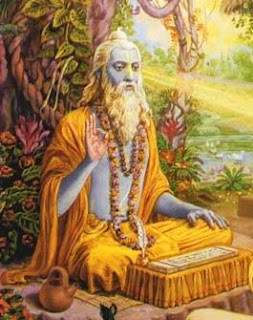


Alleged Classification of the Vedas and the schools of thoughts

advaitis classified the Vedas into Gynana Kanda (Upanishads and knowledge) and Karma Kanda ( dealing with rituals )
Advaitis pay more importance to Gynana Kanda and ignore Karma Kanda. This way they can skip over the explicitly dualistic parts and pay importance only to a few statements in Upanishads upon which their philosophy is placed.
All other schools agree to this classification and chose their corner.
Purvamimasikas chose Karma Kanda and lay more stress on Karma rather than Gynana
Buddhists reject both sections as they don’t accept the Vedas at all
Nayayika’s accept both but not as the main proof (also accept Vedas)
Foreign authors translating Vedas trying to retrofit it into their “biblical” frame of mind, claim it was written by nomadic poets while being drunk on Soma.
People with no other background, trying to read only Vedas; come to the conclusion that Indra is a Vedic God and Vishnu (Sri Krishna) is a puranic God.
In the face of all these challenges we shall examine Sri Madhvacharyas Rig Bashya and see how it clears all the confusion

I All vedas are sacred there is no classification, wherein we can ignore certain verses.
SriMadacharya questions this classification itself, with the following proofs
I
Mundaka Upanishad 1.4 -1.5
tasami sa hovaca: dve vidye veditavye iti ha sma yad brahmavido vadanti para caivapara ca.
tatrapara rig-vedo yajur-vedah sama-vedo ‘tharva-vedah shiksha kalpo vyakaranam niruktam chando jyotisham iti. atha para yaya tad aksharam adhigamyate.
The Atharvana(Mundaka) Upanishad states that there are two levels of knowledge viz. paravidya and aparavidya
The primary source of these two levels of knowledge is one and the same. The Vedas and Vedanga constitute this source. The ritual
knowledge obtained from these constitutes Aparavidya while the knowledge of Akshara i.e. the supreme GOD is ParaVidya. The latter is philosophical meaning.
Rig Veda, Yajur Veda, Sama Veda, Atharva Veda, phonetics, ritual, grammar, etymology, meter, and astronomy are all AparaVidya. Superior knowledge is what brings one to the imperishable Supreme.
Mundaka Upanishad 2.1
tad etat satyam mantreshu karmani kavayo
     yany apashyams tani tretayam bahudha santatani
tany acaratha niyatam satya-kama
     esha vah panthah sukritasya loke
The Supreme is eternal and real. The rites that the great mystics saw in mantras are recorded in the three Vedas. Desiring the Supreme, you should perform those rites. That is the path of piety in this world.
II
Bhagavad Gita 15.15
“vEdaischa sarvaihi ahamEva vEdyO“
All the Vedas describe Sri Krishna alone
III
KATOPANISHAD 1.15
sarve veda yat padamamananti
tapagmsi sarvani ca yad vadanti
That form which all the Vedas indicate, and all the penances they describe to realise it
No where has the vedas have been divided as proposed, all the rituals in the Vedas lead to the Gynana is also confirmed in the second line as well.
Therefore it removes the psuedo sheild created, all the philosophies are now answerable to all statements of the Vedas.

II Summary of all the Vedas is Sri Krishna

The entire Veda has philosophical meaning and conveys the supreme GOD.
I
Bhagavad Gita 15.15
“vEdaischa sarvaihi ahamEva vEdyO“
All the Vedas describe Sri Krishna alone
II
KATOPANISHAD 1.15
sarve veda yat padamamananti
tapagmsi sarvani ca yad vadanti |
Yadicchanto brahmacharyam charanti
tate padam sangrahena bravimyomityetat ||
Yama said: ‘That word (or place) which all the Vedas record, which all penances proclaim, which men desire when they live as religious students, that word I tell thee briefly, it is Om

III Meaning of Gayatri Mantra

OM      – Ashesha Goona Purana – Narayana
BHUR    – poorana
BHUVAHA – bhuti varaha – bhuti ( Lakshmi ) + varaha ( Husband ) = Sri Lakshmi Narayana
SUVAHA  – su + vaha – Sukha + anata = Ananta Sukha
- Therefore the meaning of the Vyaghratis are Narayan, Poorna, husband of MahaLakshmi and full of Ananta Sukha
TAT     – Gunaihi tataha – tat means Vyapta – Present everywhere with all Gunas
SAVITUR – pra savituhu – jagat savitaha – creator of the Universe
VARENYAM – vareniyaha – bhajaneyah – worshipped by everyone;
BHARGA – bharati gynana roopatva – bha + rati – Gynana roopas
DEVASYA – devaha gunotehe – Filled with Gunas
DEEMAHI – akila janerniya deehaha – Giver of Gynana to everybody
DHEYOYO NAHA PRACHODEAT – asheha buddhi naam preraka – Giver of all budhi and to everyone. (Quantitative and Qualitative)
Purusha – sa poornatva puman nama – there Purusha means Poorna ( Guna Poorna )
Om -> Gayatri ( 3 padas ) -> Purusha Sukta (3 vargas) -> Vedas ( Therefore each word of Veda talks about Sri Narayana )

IV All the words in the Vedas mean Sri Krishna

I Akashat Patitam toyam yata gachati sagaram | sarva deva namaskara keshavam prati gachati ||
II
vede ramayane caiva purane bharate tatha
adavante ca madhye ca visnu sarvatra giyate |
Harivamsa
“In the Vedas, Ramayana, Puranas and the Mahabharata, from the beginning till end, and also in the middle, Visnu is glorified everywhere.”
III In fact all the devatas have kept the name of Sri Hari just we name kids after Gods and great personalities all Gods have taken names of the Supreme God Sri Krishna.
Rig Veda 10.82.3 ( Vishakrama Sukta )
Yo devanam namadha eka eva
tam samprashanam bhuvana yantyanya
The name giver of all God is one; other Gods come to inquire of him
Rig Veda 1.164.46
Indram Mitram Varunamagnimahuratho divyaha sa suparano garutamaan |
Ekam sadvipro bahuda vandyatyagnim yamam maatarishwaanmaahuh ||
‘They (the men of wisdom) call him Indra, Mitra, Varuna, Agni, and he is the heavenly, noble-winged Garutman. The God is one, but sages call it by many names; they call it Agni, Yama, Matarishvan (and so on).
* Interestingly maatarishwan is the name of Vayu Devaru  Ref Vayu Stuti – Matarame Maatarishwan
Each verse/word of Vedas have atleast 3 levels of meanings as stated in Skanda Purana
1. Agryadidevataparatvena
2. tadantargatavishnuparatvena
3. adhyatmaparatvena
trayoarthaha sarvavedeshu dasharthah sarvabharate
vishnon sahasranamapi nirantarasatarthakam || Skanda Purana
Vedas have at least three meanings, Mahabharata has atleast ten meanings and Vishnu Sashranama has at least 100 meanings for each word.
* Note SuMadhvaVijaya records that in Kerala, SriMadhacharya demonstrated 100 meanings for the word Vishvam.
For Instance the Agni in the verse agnimile purohitam conveys both Agni and Vishnu; just like the word Ganga is used to indicate Ganga pravaha and Ganga Gatira
Another way of looking at it is, if the definition of Agni is to burn, then Agni has this characterstic but Sri Hari has it infinitness as he can burn the whole brahmanda with just a side glance.
So Agni primarirly means Sri Hari and then Agni devata.
Objections to this method of interpretation
1) Some people may raise objection that that the same word having two different meanings will cause the sentence to have two different meanings hence causing vakhyabehda.
SriMadAcharya clarifies that vakhyabheda arises only if the two meanings are conveyed by the same vritti. For Example the word aksha means chariot wheel and dice play.
In this case two sentences are need to accomodate both the meanings. However Agni etc words are conveyed by two different vrtti. pramamukyavrtti and mukyavrtti therefore does not lead to vakhyabheda
2) If all hymns convey Vishnu then why have separate names as AgniSukta etc, why not name them all as Vishnu Suktas.
This objection does not hold good as Sri Hari has to be meditated upon as being persent or antaryami in these dieties.
Brhadaranyaka Upanisad 6-2-21
Parokshapriya iva hi devaha
Aitareya Upanisad 2-4-3
pratyaksadishaha
Srimad Bhagavatam 11-21-35
paroksham mama cha priyam
All the quotes prove that Lord  likes only when referred to in a secret way. Devatas are interested in being referred to, openly but only in a secret way and they like such procedure. To be praised by so much clear words, they may not like.

V Rishis, Devata and Chandas

This is a critical point to understand, because all foreign authors intrepret this as the authors.
Vedas are authorless, then what is the point of Rishis? Rishis are the discoveres of the Vedas, by worshipping Sri Hari Vayu they make their minds pure and Saraswathi Devi blesses them and they are able to “see” the Vedas.
“Drushtva” is a term that has no real translation in English, so seeing is a loose translation.
Most importantly it is not the product of the “fertile imagniation of Aryan poets drunk on Soma” as is popularly believed in the West.
The fact that Vedas reveal themselves to the worthy, explains the importance of Guru. Without a proper Guru, we can never understand the depths of the Vedas. If we try to read only the Vedas without proper initiation we’ll wind up with useless meanings and wind up in misery.
SriMadAcharya gives the Rishi hierarchy.
|
Hayagriva Rupa Paramatma
|
ChaturMukha Brahma Vayu – Brahmani Bharati
|
Rudra Sesha Garuda aitesham patnyaha
|
Shakradyaha – aitesham patnyaha
|
Dakshadyah
|
Sankadyaha
|
Manvaha
This is the overall hierarchy. If there is a mantra for which you don’t know the rishi; just say Narayana Rishih :) simple trick taught by SriMadAcharya.
For the Vedas
RigVeda – Shakra
YajurVeda – Surya
SamaVeda – Soma
Atharvangirasa – Agni
Atharvana – ekarshi
There are Rishis for each of the whole veda, separate Rishis for each hymn. For some hymns more than one Rishi is acceptable; as this means that more than one Rishi discovered that hymn.
SriMadAcharya also states that one who masters a hymn twelve times is also a Rishi for that hymn.
* This discovery concept clears the confusion that may arise that one hymn has many rishis
The greatness has of ChaturMukha Brahma has to be admired in the fact that he was able to grasp the whole Vedas in one shot.
Here, a ticklish question is raised. In certain hymns, the Risi asks for a chariot, etc worldly things. In certain others, an appeal is made to free from the bondage.
For such hymns, Visnu or Brahma cannot be Risis. Therefore, the position that these are the Risis for the entire Veda cannot be justified. This is clarified by pointing out that the
statements in these hymns are seen as the future statements to be made by Sunashyepa etc persons concerned. The supreme GOD knows things that take place in future and are
recorded in Vedas. These are not the statements of GOD himself.
VI Glossary of the Vedas
Sri Veda Vyasa has create a unique glossary of words that needs to used when deciphering the meanings of words in the Vedas called Vyasa Nirukti.
For a detailed view on the 1st Sukta “Agni Mile Purohitam” see “RigBhashya Agni Suktam”

VII SriMadBhagavatam has an entire chapter (10-87) wherein all the Vedas personified go and pray to Sri Vishnu in the ksheera Sagara

Any mistakes are solely mine.

References
Rig Bashya Introduction on www.tatvavada.org
http://vyasamadhwa.org/upanyasa/SarvamoolaGranthagalu/0111RigBhashyaM001.mp3
http://gyanasampat.in/index.php?option=com_content&view=article&id=12:prameya-ratna-no-1-sri-hari-vayu-stuti&catid=3:prameya-ratna&Itemid=15

Sri VijayDasara antargata Bedi Anjaneya antargata Sri Lakshmi Venkatesha Swamy arpanamastu! Sri Krishnarpanamastu,

Hrishikesh

Monday, April 11, 2011

Sri Rama Navami

Jai Bedi Anjaneya !!!!

JAI SRI RAAM !!!


Sri Raghavendra Swamy has done us an extremely great service by condensing the entire Ramayana in just 12 shlokas. Without missing a single important event, in a way that Sri Hari Sarvothamma is proved. It's an immense contribution and should be part of everybody's morning shlokas.

Source http://www.gururaghavendra1.org/articles/rama.pdf

[ [ SREERAMA CHAARITRA MANJARI -ENGLISH TRANSLITERATION ] ] :-

<1> Sreemaanpoorva Prajaatho Dasharathanrupatey Ramanaamaatha Neetho
Vishwamitrena Mantraahrudhanujasahitasthaatakaam Ghaathakostram
Bramhaadhyaa Praapya Hanthvaa Nishicharanikaram YajgnnapaaloVimochyaa
Halyaam Shaapaachha Bamkthvaa Shivadhanurapayan
Jaanakeem Naha Praseedheyth||
<2> Aayan Ramaha Sabaaryodhwani Nijahasahajyrbaarghaveshvaasaropaath
Thadhgam. Hathvaa Suraareem Puraga Utha Nuthasthaapasyrboopaprustyhi
Kalyaanananthadharmogunalavarahithaha Praaninaamantharaathmeyth
Yaadhryuktaschaabhisheke Purajanamahitho Mahyathaam Mey Vachobihi||
<3> KykeyiPreethiheythoho Sahajanrupajo Valkalee Yaanaranyam
Gangaathaaree Guhaacharyaha Krutharuchirajato Geespatheyhey Putramaanyaha
Theerthva Krushnaam Prayaathovathu Nijamamalam Chitrakootam Prapannam
Svaambaabirbraatharam Tham Shruthajanakagathihi Saanthvayan
Vyupthatheerthaha||
<4> Dhatvaasmyi Paadhuke Sve Kshithibaranakrutho Preypya Tham Kaakanetram
Vyasyaaraadhyothrinamnaa Vanamatha Samitho Dandakam Thaapaseshtam
Kurvan Hathvaa Viraadham Khalakuladhamanam Yaachithasthaapasaagryi
Stheshaam Dhathvaabhayam Svaanasidhanurishudheen Yaanagasthyaathsa
Paayaath||
<5> Aaseenaha Panchavatyaamakurutha Vikruthaam Raakshaseem Yo Dhvisaptha
Thravyaadhaanamapyanekaanatha Kharamavadheedh
Dhooshanam Cha Thrisheersham
Maareecham Maargaroopam Dhashavadhanahruthaamaakruthim Boomijaayaa
Annvishynaanrthagrudhram Svagathimatha Nayan Maamaveth Ghann Kabandham||
<6> Pampaateeram Sa Gachhannihaa Kruthavasathihi Bakthithustaha Shabaryyi
Dathvaa Mukhtim Prakurvan Hanumatha Udhitam Praapthasugreevasakhyam
Saptha Chithvaatha Thaalaan Vidhivarabalino Vaalibith Sooryasoonum
Kurvaano Raajyapaalam Samavathu Nivaasam Malyaavathkandharesou||
<7> Nithvaa Maasaan Kapeeshaaniha Dhasha Harithaha Preshya Seetaam Vichanthyaa
Yaathsreemadhanumadhgirimatha Samanusruthya Gachan Kapeendryhi
Sugreevadhyrasankhyayirdhashamukhasahajam Maanayannabdhivaacha
Dhythyajnaha Seythukaaree Ripupurarudhavedha Vaanaryvyirighaathi||
<8> Bhagnam Kruthvaa Dhashaasyam Gurutharavapusham Kumbakarnam Nihathya
Pradhvasthaaseshanaagam Padhakamalanatham Thaarkshyamaanandha Ramaha
Sarvaanujeevayatham Giridharamanadhaschaajaneyaath Kapeen Svaan
Vijgnaanaastreyna Rakshan Samavathu Dhamayan Lakshmanaachhathrashatram||
<9> Thravyaadhaan Ghannasankhayaanapi Dhashavadhanam Bramhapoorvyhi Sureshyhi
Pushpyraakeeryamaano Huthavahavimalaamaapya SeetaamVidhaaya
Rakshonaatham Svabaktam Svapuramatha Gathaha Pusphakasthyhi Samasthyhi
Saamraajye Chaabhishiktho Nijajanamakhilam Maanayan Mey Gathihi Syaath||
<10> Rakshan Kshoneem Mamrudhaam Nutha Utha MunibheermaanayanVaayusoonum
Preshyaadhithyaathmajaadheen Vyathanutha Bharatam Youvaraajyenumaanya
Kaarye Soumitreemaarthashvagadhithakrudharignotha Shatrughnatho Yo
Hathvaasou Dhustashoodhram Dhvijasuthagubhaveth Kumbhajaanmaalabhaaree||
<11> Yajnam Thanvan Trikoteen Vyathathudhatha
Bharathaadhyosuraaneeshavaakyaadh
Yaasyaan Dhamaathreeputram Bhujeematha Sa Nayannathmasoonoo Svaraajye
Krutvaa Shreehreehanoomaadhruthavimalachalachaamarachhatrashobhee
Bramhadhyihi Sthooyamaano Nijapuravilasathpaadhapadhmovathaanmaam||
Ithi ShreeRamachaaritramanjaree Leshathaha Kruthaa|
Raghavendreyna Yathinaa Bhooyaadh Raamaprasaadhadhaa||


[ [ An Attempted IMPROMPTU LINE SUMMARY ] ]
<1> *MahaVishnu^ who took birth in the Name of Rama, son of Emperor Dasharatha,
along with His brother in the Tretha Yuga, Slew the she-demon Taataki who was
tormenting the performance of Yagna by Sage Vishwamitra. Lord Rama soon dispatched
all such sworn enemies of the righteous to their doom, and thereby protected the
performance of Yagna of the renowned sages. Lord Rama ‘Broke’ the mighty Bow of
Shiva, and won over Janaki, the lithe daughter of King Janaka. May Such a Lord be with
me always ||
<2> After the marriage, Lord Rama Left the Kingdom of Mithila accompanied by his
new bride. En route Lord Rama was challenged by the fierce BaarghavaRama. In the
ensuing battle, the demon Atula hiding inside Baarghva Rama was slain by the Lord.
Consequently the Lord was Hailed by renowned Sages as the Most Auspicious One and
as the Most Renowned One in all The Three Worlds. Such bravery and fame of the Lord
made Him most qualified for being Crowned as King. I Offer flowers of my Composition
At the Lotus Feet of such a Lord ||
<3> In order to please Mother Kaikeyi, Lord Rama headed towards the Forests
accompanied by his devoted wife and brother, all attired in ordinary clothes. Then with
the help of a devoted oarsman Guha Crossed the River Ganga. Lord Rama wearing
matted hair also crossed many Holy Rivers and Arrived at the famous and scenic place of
Chitrakoota. Here on learning about the demise of His father from His brothers’ and
mothers’ who had followed Him to the forests, The Lord Performed ceremonial ablutions
in memory of His departed Father, Emperor Dasharatha ||
<4>Bequeathing His Paadukaas to His brother Bharatha and thereby empowering him to
rule the Kingdom on His behalf, Lord Rama in due course Slew the demon Kakaasura ;
and accepted the hospitality of Sage Atri and was much revered by him. Lord Rama
entered the thick forests of Dandakaaranya and soon became the cynosure in the eyes of
all sages present there. In this forest Lord Rama granted Salvation to Sage Sharabanga
and slew evil demons before proceeding towards the Ashrama of Sage Agasthya where
He Accepted many powerful weapons ||
<5> While residing at Panchavati, Lord Rama was accosted by the terrible she demon
who expressed her desire to marry him. On account of which she herself was disfigured
in the bargain. Lord Rama also Slew the evil demons named Trishira, Khara, Dhooshana.
Lured by the treacherous deceit of Mareecha, The Lord’s wife was carried away by the
Ten headed demon Ravana. In search of His wife, Lord Rama Found the grievously
wounded Jataayu ||
<6> Arriving at the banks of River Pampa, Lord Rama Met the awaiting Shabari and
granted her redemption. Then on being requested by the valiant Hanumantha, Lord Rama
Extended friendship towards Sugreeva. Lord Rama also Demonstrated His Strength by
felling series of mighty Trees. Lord Rama later Slew the powerful Vali and enabled
Sugreeva to become King before retiring to the Malayavantha Mountain ||
< 7 > As months rolled by, Lord Rama, The Son of Kausalya dispatched His monkey
brigades in all direction in search of His Wife. Acting as per the Orders of Lord Rama,
Hanumantha, searched the four corners of the World before heading towards Lanka
Patna with many comrades and slew many demons there. A huge bridge was constructed
to move towards Lanka Patna. The surrender of Vibheeshana was accepted with open
arms ||
< 8 > After Slaying the gigantic demon Kumbhakarna who had joined battle alongside
the demon king Ravana, Lord Rama feigned as if bound by the powerful spells cast with
the invocation of poisonous serpents. Lord Rama later expressed His indebtedness to
Garuda for releasing one and all from the vicious coils of serpents. Soon, Hanumantha
arrived with the Mountain containing Sanjeevini herbs and instantly revived the entire
fallen monkey armies. Lord Rama accompanied by His brother Lakshmana later Slew the
deceitful Indrajit ||
< 9 > At the end of the battle, Lord Rama annihilated countless number of powerful
demons including the invincible Ravana. Then amidst showers of flowers raining down
from the Heavens as a sign of respectful obeisance offered by Celestials led by Bramha,
Lord Rama once again regained His beloved Wife Seeta. Accepting the offer of
Pushpaka Vimana by the humble Vibheeshana as a mark of gratitude, The Victorious
Lord Rama accompanied by His Wife, journeyed back towards Ayodhya to reclaim His
Kingdom ||
< 10 > Lord Rama Reigned over the Three Worlds in accordance to the wishes of
eminent sages and His subjects. Lord Rama Reigned Supreme as the most beloved master
of the devoted Hanumantha, as well as to the crown prince Bharatha and to the faithful
Lakshmana. Lord Rama proved to be the Sole Protector of all His subjects. In due course
Lord Rama Instructed Shatrughna to vanquish the evil Lavanaasura and Himself
punished the evil Shambuka ||
< 11 > Lord Rama soon Performed the famed Ashwamedha and enabled the valiant
Bharatha to slay many thousands of demons. Lord Rama then in accordance to the
request of Maha Rudra pacified Sage Doorvaasa with an array of sumptuous meals. Thus
Emperor Lord Rama Under Constant Salutations by All Reigned as a Mighty Emperor
being much decorated with many Royal Insignia. Thus Reigning over such a vast empire
Lord Rama proceeded towards the Heavens in Full Glory. May such a Lord Rama Protect
me always ||
< 12 > May Lord Rama bestow His Famed Benevolence on all those who continuously
study this Work Composed by Sreemadh Raghavendra Theertharu ||

Jai Bharateesha,
Hrishikesh

Sunday, March 20, 2011

RigVeda Bhashya ( Agni Sukta )

* Rig bhAShya *


Most translators term Vedas as a composition of  nomads by poets "drinking" Soma. It's ridiculous to think our immensely vast and rich culture eroded by such translators. This is a small effort to show how revered each sutra of the Veda is and how much we need a Guru to understand the true meaning of the Vedas. I've presented the popular English translations as a reference point to show how much of the mark they are. Interpreting Vedas requires a lot of knowledge; can you decipher a medical report using a dictionary? You need a medical dictionary at least, you need a specialist with experience to understand what the report really means. If you attempt a surgery based on the English dictionary meanings of the medical reports, can you imagine the state of the patient.

अग्निमीळे पुरोहितं यज्ञस्य देवं रत्वीजम |
होतारं रत्नधातमम || Rig Veda 1.001.01

aghnimīḷe purohitaṃ yajñasya devaṃ ṛtvījam |
hotāraṃ ratnadhātamam || Rig Veda 1.001.01

* Translation by Griffith in 1896
I Laud Agni, the chosen Priest, God, minister of sacrifice,
The hotar, lavishest of wealth.

* Translation by Sa_yan.a and Wilson
1.001.01 I glorify Agni, the high priest of the sacrifice, the divine, the ministrant, who presents the oblation (to the gods), and is the possessor of great wealth. [Agni = purohita, the priest who superintends family rites; or, he is one of the sacred fires in which oblations are first (pura) offered (hita); deva: a god, the bright, shining, radiant; fr. div, to shine; or, one who abides in the sky or heaven (dyusha_na); or, liberal, donor (in the sense of giving); r.tvij = a ministering priest, he is also the hota_ (Aitareya Bra_hman.a 3.14), the priest who presents the oblation or who invokes or summons the deities to the ceremony; fr. hu, to sacrifice; or, fr. hve, to call; ratnadha_tama: lit. holder of jewels; ratna = wealth in general; figurately, reward of religious rites].

You can easily see that the first translation is a word by word translation. Vedas will never reveal their true meaning to people who don't do Sandhyavandane.
The second translation is slightly better because it references other texts, so immidiately it is clear that only one who has complete grasp of Vedas should even attempt to translate. But even this meaning is highly superficial as we shall see.

Srimadacharya has stated that the Vedas have three meanings. He has illustrated this by writing a commentary on about forty hymns or 'suktas' from the Rig veda, starting with 'AgnimeelE purOhitam', explaining how this Sukta is primarily a prayer to Lord Vishnu. As in the case of all his works, in this commentary also he has shown that the Vedas uphold the supremacy of Lord Vishnu and the dependence of all the gods (devatas) on Him. Srimadacharya has explained the importance of 'Rishi, Devata and Chandas" in reciting Vedas. This work should be treated as the guiding principle for interpreting Vedic hymns.

The bashya of SriMadAcharya is presented as follows:

Agni shabdo ayamagra evābhipoojyatām
Agryatvam-agra-netrtvamattim-añgāganetrtām.
Aha tam staumy-ashesasya purvameva hitam prabhum.
Rtvin-niyāmakatvena yajñānam-rtvijam sadā.
Dyotanañd-vijayāt-kāntyā stutyā vyavahrter-api.
Gatyā ratyā-ca devākhyam hotr-samastham visesatah.
Agni-samasthena rupena yato agnir-hotr-devatā.
Indiriyāgnisu cārthānām yaddhotā hotr-nāmakah.
Ratidhārakottamatvātsa ratnadhātama iritah.

Each and every word has the main meaning or mukhya-artha as Sri Hari. Even though the above translations as valid, they are superficial.

Agni Meaning 1)Agre evea abhipujyatvatvat agnih - The one who is worshipped first Sri Hari and Agni.
Agni Meaning 2)agre bhava uttamma - Agni also means superior, Sri Hari is superior to everyone, hence called Agni. Agni is superior to those he controls, but Sri Hari is superior to everyone.
Agni Meaning 3)agrya netrtva or pratham pravartakatva - First activator; Bhagwan Vishnu created the sentient and non-sentient creations and was the first activator. Similarly Agni is also the first activator in sentient and non-sentient under the direction of the super controller.
Agni Meaning 4)Attrtva - being the destroyer - Sri Hari destroyes the entire brahmanda at the end of the maha pralaya hence he is called Agni. Fire God Agni who is partaker of ghee (atta) in the sacrifice can also be called Attrtva and hence Agni
Agni Meaning 5)Anga neta and sharira pravartaka - Sri Hari activates all bodies hence he is called Agni, Agni by his presence also activates bodies hence he too is Agni
Agni Meaning 6)Aga-neta - Aga is that which cannot move on it's own. Sri Hari is sarva tantra svatantra; he is completely independent. Hence this whole brahmanda "Aga" is completely dependent on Sri Hari hence Sri Hari is called Agni

Note: Fire God Agni has some of attributes but in a limited manner. Sri Hari has all these attributes infinitely; and infinite number of attributes. Hence all the mantras have Sri Hari as their mukhya artha.

The remaining words purohitam, yajñasya, devaṃ, ṛtvījam, hotāraṃ and ratnadhātamam all praise Sri Hari's glory in the main.

Sri Hari is called purohitam as he is the "hita"-conductive to the world since time immemorial.

Sri Hari is called as deva (Effulgence,victory,shine,praiseworthiness,knowledge and bliss)

yagnasya rtvijam - Though Sri Hari is present in all the rtvik's or brahmins performing sacrifice; it is in hotā that he is present in Agni form. It is this form that is especially praised by Agni Sukta.
So yagnasya rtvijam - mentions that Sri Hari is present in all the hotas and also in the specific form in Agni Sukta.

Sri Jayatirtharu has given an expalination for each meaning and shown the reference of the shastra where the specific meaning has been used.

Some people are of opinion that since Acharya's RigbhAshya has explanations of only 3 chapters, it is incomplete work. But Sri Jayatheerta in his commentary to the work has cleared this doubt by mentioning "with the explanation given in the first chapters , one should get enough guidance to understand remaining part of Rig-veds, that is the reason why Acharya Madhwa did not give further explanations".
There is a strong understanding that Sri mAdhavatIrtha - direct disciple of Acharya Madhwa has followed the Acharya's RigbhAshya and given explanations of all other vEdas. guruguNastavana mentions that shrI rAghavEMdratIrtaru has given explanations for all the three other vedas following the style of RugarthamaMjari which inturn is based on the RigbhAshya and its commentaries. There is a unique commentary by Sri Jayateertaru for Acharya's Madhwa's bhAshya and it is saMbhaMdhadIpika. For saMbhaMdhadIpika,TippaNis by bidarihalli srInivAsatIrtharu, vidyAdhIshatIrtharu,his brother kEshavAchArya pAMDuraMgi, kaMbAlu rAmachaMdratIrtharu, satyanAthatIrtharu,ChalAri narasiMhAchAryaru and sumatIMdratIrtharu are available but only tippaNis by satyanAthatIrtharu,ChalAri narasiMhAchAryaru and bidarihalli srInivAsatIrtharu is published

* Reference : Tatvavada English Magazine, June 2010 , "Sri Madhvacharya's Vedic Insights"

Any mistakes are solely mine.

Jai Bharateesha,
Hrishikesh

Tuesday, February 22, 2011

Madhwas XI

Guru Madhwa Rayarige Namoh Namoh, Guru Madhwa Santatige Namoh Namoh

The Madhwa Guru Parampare has a glorious tradition, with the list of dream teams floating around in the World Cup Fever. How's this for a team "Madhwas XI"

The Manager of the Team is Sarvothamma Sri Hari, The coach is Outstanding Jeevothamma Mukhya Prana :)

Opening Partnership:Ashta Muttas, Vishnu Tritharu, Trivikrama Panditacharaya, Narayana Panditacharya
In the all important No 3. Position comes the August and Majestic Jayathirtaru, who lays a solid foundation
At No.4 is the prolific Sri Padarajaru
No.5 is none other than Sri Vyasarajaru
No.6 & No.7 Sri Vijayendra Swamiglu at Kumbakonam end and Sri Vadirajaru at Sonde end !!! What a partnership !!! Imagine the Trashing kali has got at both ends.
No.8 is the Magnificient Sri PurandaraDasaru 4,75,000 songs & Kanaka Dasaru what a score !!!
No 9. is Sri Raghavendra Swami ( What a No.9 )
No.10 Sri VijayDasaru with his 25,000 compositions and full fledge Dasa Sahitya Parivara Mohan Dasaru, Gopal Dasaru, Kallur Subbanacharya
No 11. Sri Jaggantha Dasaru with his magnum opus Sri HariKatha AmruthSara

There is also Raghottamma Tirtha, JitamaTirtharu, Sri Vishnu Tirtharu, Satyabhoda Tirtharu, Satyatma Tirtharu

What a line up !!!!

Guru Madhwa Rayarige Namoh Namoh, Guru Madhwa Santatige Namoh Namoh !!!

Jai Bharateesha,
Hrishikesh

Monday, January 24, 2011

Birthday of Sri Raghavendra Swamy – 12th March 2011

Jai Bedi Anjaneya !!!!


Dhyana shloka for Raghavendra swamy

ತಪ್ತ ಕಾಂಚನ ಸಂಕಾಶಂ ಅಕ್ಷಮಾಲಾಂ ಕಮಂಡಲುಂ
ದೋಭ್ಯಾಂ ದಧಾನಂ ಕಾಶಾಯವಸನಂ ರಾಮಮಾನಸಂ
ಯೋಗೀಂದ್ರ ತೀರ್ಥ ವಂಧ್ಯಾಗ್ರಿ ತುಳಸೀಧಾಮ ವಕ್ಷಸಂ
ಜ್ಞಾನ ಭಕ್ತಿ ತಪಃ ಪೂರ್ಣಂ ಧ್ಯಾಯೇತ್ ಸರ್ವಾರ್ಥ ಸಿಧ್ಧಯೇ
Taptha kaanchana sankaasam akshamaalaam kamandulum
Dobhyaam dadhaanam kaashaayavasanam raamamaanasam
Yogeendra theertha vandhyaangrim
Thulaseedhaama vakshasam
Gyaana bhakthi thapaha poornam
Dhyaayeth sarvaartha sidhdhaye


Poojyaya Raghavendraya Sathya Dharma Rathayacha,Bhajataam Kalpavrikshaaya Namataam Kaamadhenave ||
Durwaadi Dhwantaravaye Vaishnavendi varendave, Sri Raghavendra Guruve Namo Atyanta Dayaluve ||

Most people tell only the first line; most scholars infer that these two lines have to be said together to poorna phala as the sentence ends here.

Poojyaya Raghavendraya Sathya Dharma Rathayacha,Bhajataam Kalpavrikshaaya Namataam Kaamadhenave ||
Sri Raghavendrateertha Gurusarvabhoumaru is the Able Yati for Archana,Vandana and Aradhana -. Poojyaaya. Always indulged in the Aradhana of Sri Hari - SatyaDharmaRataayacha. Devotees who have
Surrendered fully, for them Rayaru is Kalpavruksha and Kamadhenu. So I here by offer my Sashtaanga Namaskara to this Great Sri Raghavendrateertharu, Mantralaya Rayaru.


Durwaadi Dhwantaravaye |
Vaishnavendi varendave ||
Sri Raghavendra Guruve |
Namo Atyanta Dayaluve ||

Durwaadi - Bad Philosophies causing darkness/ mithyavada etc.
Dhwantaravaye - You are like a sun
Vaishnavendi varendave - For Devotees of Sri Hari; you grant boonts (like a moon to Vishnu Devotees)
Sri Raghavendra Guruve -  O Guru Sri Raghavendra
Name Atyanta Dayaluve - O utmost merciful one, please accept my salutations 

You destroy wicked philosophies; like the effulgent sun removes darkness. you are like the moonlight for Sri Hari bhaktas. I salute you O most compassionate one, O Sri Raghavendra Guru !!!

Mookopi yathprasadena |
Mukunda Shayanaayathe || 
Raja raajayathe riktho |
Raghavendram tamaashraye ||

With whose blessings even a dumb can speak as eloquently as Sri Adi Sesha(Thousand Headed Serpent on which Lord Sri Vishnu rests) and with whose blessings a pauper turns into a rich, to them, Sri Guru Raghavendra Swamygalu, I'm surrendering my self !!!   

 * With Sri Raghavendra's grace one can become a Sudha Pandita .

|| SrI rAma || || harE srInivAsa || || SrI rAma ||

|| srI gururAjOvijAyatE ||


Palimaru Matha Web Team brings this saptaaha Mahotsava to you LIVE

High quality (DV) Video/Audio Live from Kustagi

Timings Morning 5-00 am to 11-00 PM Non Stop Day long Live streaming
Log on to www.saptaaha.com Streaming start from (Live) 5th morning @ 5
A.M (IST)

Please find Invitation Day By Day List of this year saptaaha on this
link

www.saptaaha.com/invite.pdf


chant SrI rAgavEMdrAya namaH


kRushNA kRushNA ennalu kaShTavoMdiShTilla kRushNA enabAradE

(if we utterkRushNA kRushNA , there is not an ounce of kaShTa
(miseries), why dont you utter the name of kRushNa)


rAma nAma bhajisidavage uMTe bhavada baMdhana

(is there bondage of rebirth for the one who sings the name of rAma)


In this manner, there are ample number of sayings in
shAstrAs ,purANAs,mythologies and haridAsa’s compositions which
explains the grandeur of chanting the name of Supreme Lord.

Similarly haridasaru glorify the same by saying “nInyakO ninna
haMginyAko ninna nAmada balavoMdiddare sAkO”


SrI rAghavEMdra gurugalu is the world famous great personality who has
chanted such name of sri hari in every birth.Just like the name of SrI
rAma, chanting “SrI rAghavEMdrAya namaH” will fulfill all the wishes
of his devotees.


SrI rAghavEMdrAya namaH ityaShTAkShara maMtrataH |

japitAdbhAvitAnnityaM iShTArthasyurnasaMshayaH ||


SrI Appannacharya proclaims that by either chanting the 8 letters of
“SrI rAghavEMdrAya namaH” or by meditating upon it, all the wishes
will be fulfilled, there is no doubt about it.


“rA” enne rAshi dOShagaLa dahisuva

“Ga” enne Gana j~jAna bhakutiyanIva

“vEM” enne vEgadi janana maraNa dUra

“dra” enne draviNArtha shRuti pAdyana kAMba


he will burn heaps of our faults when we say “rA”

he will grant us with immense devotion filled with knowledge when we
say “Ga”

saying “vEM” drives away the cycle of birth and death

and by telling “dra” one will get to see the draviNArtha shRuti pAdya


In this manner Sri Gopaladasaru has indicated that , every letter in
Sri Gururaja’s name fulfills wishes. Along the same lines, Sri
JagannathadAsaru says:-


gururAjashTAKSharaM syAt mahApAtakanAshanam |

EkaikamakSharaM cAtra sarvakAmyArtha siddhidam ||


Which means the 8 letters of “SrI rAghavEMdrAya namaH” destroys all
the mighty sins, every letter in this name, will result in fulfillment
of all the wishes, JagannAtha dasaru also composed a separate work
named “shrI rAghavEMdra aShTAkShara stOtra” which describes the
results of chanting each letter of SrI rAyara name as below :


chanting of “ra” relieves one from all the diseases,

Chanting of “Ga” enhances longevity, glory and strength of the person

chanting of “va” will result in gain of worldy riches

chanting of “dra” will drive the sins of person chanting

he who chants “ya” will not be troubled by yama

chanting “na” will bestow higher positions

by chanting “ma” one will be blessed with riches equalling that of
dEvEMdras.


rAghavEMdraneMba rUpa tAneyAgi |

rAghavEMdraneMba nAma irisikondu |

rAghavEMdrarinnu mADidaMta puNya.....


above words of Sri GOpaladAsaru has a very deep hidden meaning.


No entity in this creation is independent. MukhyaprANadEvaru, and the
Supreme Lord within him resides in each one of the souls and takes
care of their business. In the same manner, MukyaprANa devaru and SrI
rAmachandra in him resides in rAyaru and fulfills the wishes of
devotees. This fact is proven in shAstras. gurugala name “rAghavEMdra”
encompasses the meanings of these shAstras.


Chanting ‘rAghavEMdra” actually results in chanting the names of SrI
rAma,hanuma and Sri guru rAghavEMdra. if we describe the word
rAghavEMdra as the most revered person in raghuvaMsha then SrI rAma is
“rAghavEMdra” , if we describe the same word as he who has Sri rAma as
his lord, then hanuma is rAghavEMdra , and if describe him as the one
who cleanses the sins of his devotees and protects them, then we are
chanting the most renowned lord of mantrAyala Sri rAghavEMdra. Words
of dAsaru which incldes such descriptive meanings are


Itanoliyalu prANanolivanu |

vAtanoliyalu hariyu oliva |

Ita sakalake mukhya kAraNanAgi irutippa ||


Meditating upon the name of SrI guru rAghavEMDra swAmigalu who is the
most benevolent and who has been blessed with special grace of Sri
hari and vAyu , is like kalpavRukSha and kAmadhEnu to the devotees of
guru which fulfills all their wishes.

Let all of us be receivers of rAyara blessings by chanting this
mantra.


rAghavEMdra rAghavEMdra rAghavEMdra pAhi mAM |

rAghavEMdra rAghavEMdra rAghavEMdra raksha mAM ||


Palimaru Matha Web Team brings this saptaaha Mahotsava to you LIVE


Please find Invitation Day By Day List of this year saptaaha on this
link

www.saptaaha.com/invite.pdf


Seva List

The Samithi has seen and experienced that each year more and more
devotees are participating in this week long Saptaaha Mahotsava.
In order to carry-out these events and also to provide an opportunity
for every individual to participate in this noble cause, the Samithi
is pleased to announce the plan of “Shri Raghavendra Saptaaha
Seva”. The details of the various Sevas are as under:

a) Annadana
Seva 1
day Rs. 10,000


7 days Rs. 50,000

b) Pravachana
Seva 1 Pravachana
Rs. 5,000

Maximum 4 Pravachana in a Day 1
day Rs. 20,000

Including Sripadara
Pravachana 7 days Rs.1,00,000

c) Laksha Pushpaarchana
Seva 1 day Rs. 5,000


7 days Rs. 25,000

d) Sahasra Kalasa

Ksheerabhisheka
Seva --
Rs. 10,000

e) Pattabhisheka
Seva --
Rs. 5,000

f) Shastra Parayana
Seva 7 days Rs.
10,000


Donations / Contributions for the above Sevas would be accepted in
Indian Rupees only and can be made using any of the following options:

Option 1 : Payment by Online Transfer


BANK ACC HOLDER : S.R.S.K.Samithi
ACCOUNT NO: 11296400022
IFSC code: SBIN0002755
Bank: State Bank of India,

Branch: Mantralayam.
Account Type: :Saving Bank Account


Option 2 : Payment by Cheques / Demand Drafts


Cheque / Demand Draft / /Pay-Order drawn in favour of S.R.S.K.Samithi,
Mantralayam may be sent to

Archak Parimalacharya

President

Shri Raghavendra Saptaaha Karyacharana Samithi

Mantralayam

Andhra Pradesh – 518345


Donors are requested to provide complete contact details while sending
the cheques so that it would facilitate for proper communication


Prior to the commencement of the Saptaaha Mahotsava, invitation would
be sent to the Donors at the registered address and also arrangements
would be made to send ‘Rayara Prasada’ and ‘Mantrakshate’ by post.

We request the devotees to make use of this opportunity and seek the
blessings of Shri.Gururajaru.


Archak Parimalacharya

President

Shri Raghavendra Saptaaha Karyacharana Samithi

Mantralayam

Andhra Pradesh – 518345

Website: www.saptaaha.com

Email ID: info@saptaaha.com

Phone: 08512 – 279446


For any additional information regarding Sevas / Online Transfer,
please feel free to contact:


1. P.R. Prahallad - Cell No. +91-9901771660 in Bangalore


2. Archak Vyasarajachar – Cell No. +91-9885247362 in Mantralayam


The birthday of beloved Gurugalu is on 12th March 2011. What gift would you give to our gurugalu who himself is Kalpavriksha and Kamadhenu, right? However, there is one thing which our beloved gurugalu likes and it is reciting “SRI RAGHAVENDRAYA NAMAHA”.
Just like last year, I received this email from “Palimaru Matha” regarding gifting Rayaru the scared chanting of his name. Attached below are the contents of the email as is.
Please take time to chat 108 times each day, and send all the details as requested by “Palimaru Matha”.
BIRTH DAY GIFT  TO “SRI RAGHAVENDRA SWAMY” ON  THE
OCCASION OF HIS BIRTH DAY
(PHALGUNA SHUDDHA SAPTAMI : Saturday : 12-03-2011)
Phalguna Shuddha Saptami is the BIRTH DAY FESTIVAL of
“SRI RAGHAVENDRA SWAMY (GURURAJARU)”
It is customary that one gives out a gift to the beloved on the occasion of the Birth Day. The most liked item or the choice of Sri Raghavendra Swamy is the chanting of
“SRI RAGHAVENDRAYA NAMAHA”
When we chant “SRI RAGHAVENDRAYA NAMAHA”, it is in turn offered by Sri Raghavendra Swamy to SRI VAYU DEVARU    and     SRI RAMA DEVARU. Hence, chanting of  “SRI RAGHAVENDRAYA NAMAHA” is not only liked by “Sri Raghavendra Swamy” but it also fulfils the desires of the devotees because it is delivered to SRI VAYU DEVARU  and   SRI RAMA DEVARU
So, here is a great opportunity to the devotees to participate individually in this program by chanting “SRI RAGHANVENDRAYA NAMAHA” 16,000 times.
Devotees can commence the chanting and complete the same before 11-03-2011 and once you have completed the chanting inform the matter to:
============================= ======
Archaka Parimalacharya
Sri Raghavendra Saptaha Karyacharana Samithi
Mantralaya – 518345
Phone:  08512-279446
Cell   :  +91 99864 95989
Email:   http://mc/compose?to=infor@saptaaha.com
============================== ============================== ===
Upon receiving your information before 11-03-2011,
the total chanted numbers from all the devotees will be offered as a
BIRTH DAY GIFT to “SRI RAGHAVENDRA SWAMY (GURURAJARU)”
on 12-03-2011 -  Phalguna Shuddha Saptami – Saturday on the
BIRTH DAY FESTIVAL OF ‘SRI RAGHAVENDRA SWAMY (GURURAJARU)” KUSTAGI  during the Raghavendra Swamy Saptaha Mahotsavam. Rayara Sandesha on your mobile register to saptaaha

Please Click this link
http://labs.google.co.in/smschannels/subscribe/saptaaha or
Send a SMS like below ON (give one space) SAPTAAHA 09870807070
after completion of japa please fill this form (need gmail account) if not gmail please informinfo@saptaaha.com

https://spreadsheets.google.%20com/viewform?formkey= dHpucUt1Q3NILVQ5VWNLdWVoVnJzX3 c6MQ

I received the following mail, regarding SAPTAAHA celebrations, so I thought I'd share this with the readers
HARE SRINIVASA


Sri Gururajo Vijayate


Opportunity for Devotees to perform Sevas during

“Sri Raghavendra Saptaaha Mahotsava”


In commemoration of Shri Raghavendra Guru Sarvabhauma's Coronation to Vedanta Samrajya (Empire) and His Birthday - {both these days occurring during ‘Phalguna Masa’} - a week long festival is celebrated by our Samithi during ‘Phalguna Masa’ every year since 1994, with great enthusiasm and religious gaiety. This week long festival is termed as “Shri Raghavendra Saptaaha Mahotsava”.


Since 1994, the Saptaaha Mahotsava has been celebrated in the following places:

Raichur (1994), Manavi (1995), Sidhanur (1996), Gangavati (1997), Mahaboobnagar – AP (1998), Gulburga (1999), Adoni AP (2000), Chennai – TN (2001), Mulabagal (2002), Udupi (2003), Sri Rangam – TN (2004), Hospet (2005), Coimbatore – TN (2006), Raichur [second term] – (2007), Tanjore – TN (2008), Gadag (2009), Salem – TN (2010). This year, 2011, the Saptaaha Mahotsava is being held in Kushtagi (Koppal District) – Karnataka at “Sri Adaviraya Mukhyaprana Temple” from March,5, 2011 to March, 12, 2011.


During the Saptaaha Mahotsava, the following programmes are generally held:

- Samsthana Pooja by various Peethadhipathis;

- Blessings & Discourses by various Peethadhipathis;

- Discourses by various Pandits & Vidwans;

- ‘Sri Sreenivasa Kalyana Mahotsava’;

- ‘Sahasra Kalasha Ksheerabhisheka’

- Cultural Events like – ‘Harikatha’, ‘Dasavani’, ‘Dance – Drama’;

- Other Events like – ‘Shastra Parayana’, ‘Ashtottara’, ‘Laksha Pushpaarchane’, ‘Deepotsava’

- ‘Homas’ (like; Pavamana Homa, every day

- Free ‘Anna Dana’ to all devotees, all the seven days


Additional details and other activities of the Samithi can be found in the official web-site : www.saptaaha.com.


The Samithi has seen and experienced that each year more and more devotees are participating in this week long Saptaaha Mahotsava. In order to carry-out these events and also to provide an opportunity for every individual to participate in this noble cause, the Samithi is pleased to announce the plan of “Shri Raghavendra Saptaaha Seva”. The details of the various Sevas are as under:

a) Annadana Seva 1 day Rs. 10,000

7 days Rs. 50,000

b) Pravachana Seva 1 Pravachana Rs. 5,000

Maximum 4 Pravachana in a Day 1 day Rs. 20,000

Including Sripadara Pravachana 7 days Rs.1,00,000

c) Laksha Pushpaarchana Seva 1 day Rs. 5,000

7 days Rs. 25,000

d) Sahasra Kalasa

Ksheerabhisheka Seva -- Rs. 10,000

e) Pattabhisheka Seva -- Rs. 5,000

f) Shastra Parayana Seva 7 days Rs. 10,000


Donations / Contributions for the above Sevas would be accepted in Indian Rupees only and can be made using any of the following options:

Option 1 : Payment by Online Transfer


BANK ACC HOLDER : S.R.S.K.Samithi

ACCOUNT NO: 11296400022

IFSC code: SBIN0002755

Bank: State Bank of India,

Branch: Mantralayam.

Account Type: :Saving Bank Account


Option 2 : Payment by Cheques / Demand Drafts

Cheque / Demand Draft / /Pay-Order drawn in favour of S.R.S.K.Samithi, Mantralayam may be sent to

Archak Parimalacharya

President

Shri Raghavendra Saptaaha Karyacharana Samithi

Mantralayam

Andhra Pradesh – 518345


Donors are requested to provide complete contact details while sending the cheques so that it would facilitate for proper communication


Prior to the commencement of the Saptaaha Mahotsava, invitation would be sent to the Donors at the registered address and also arrangements would be made to send ‘Rayara Prasada’ and ‘Mantrakshate’ by post.

We request the devotees to make use of this opportunity and seek the blessings of Shri.Gururajaru.


Archak Parimalacharya

President

Shri Raghavendra Saptaaha Karyacharana Samithi

Mantralayam

Andhra Pradesh – 518345

Website: www.saptaaha.com

Email ID: info@saptaaha.com

Phone: 08512 – 279446


For any additional information regarding Sevas / Online Transfer, please feel free to contact:


1. P.R. Prahallad - Cell No. +91-9901771660 in Bangalore


2. Archak Vyasarajachar – Cell No. +91-9885247362 in Mantralayam

 
HARE SRINIVASA !!!!
Jai Bharateesha,
Hrishikesh 

Thursday, January 20, 2011

Climbing Tirumala hills

Sri BhooVaraha Swamy


Jai Bedi Anjaneya !!!

The whole parvata of Tirumala Kshetra is extremely divine, hence called Bhu Vaikunta !!!

History of Climbing Tirumala

Climbing the steps of Tirumala is a big utsava for Madhwas called Mettlotsava (Mettlu - steps, utsava - festival/celebration). Even today every, TTD Dasa Sahitya Project conducts a Mettlotsava, where a lot of bhajana mandlis participate and climb the steps while singing Dasara Padagalu.

Sri Vijaydasaru used to perform Saligrama abhisheka for every 100 steps.

Sri Vadirajaru, saw the whole mountain as a saligrama and climbed the entire hills on his knees!!!!

Some saints used to come down the hills just to answer nature calls. Such is the piousness of these hills

Why to Climb Tirumala

Srinivasa Kalyana first chapter talks about Madhava Brahmana, who left his wife, aging parents, stayed with a chandala, consumed beef/alcohol all of his sins were wiped out by merely climbing the hills.

My personal experience is that some of most satisfying darshanas have been when I have climbed the hills.

Prologue

By the grace of Sri Hari Vayu, I've been able to climb to Tirumala around 7-8 times.
I've decided to take you through the journey of climbing the hills. I've climbed with a lot different age groups, so I'll write this from the point of view that the climber is a reasonably weak (no offense to the reader) so it becomes a little more easy to relate. I did not take any pics while climbing, so I've had to rely on google for the pics. Thanks to everybody for their pics.

Rules

Some pretty basic rules
a) Absolutely No footwear while climbing
b) Travel Light ( Almost all supplies can be bought on the way )
c) Have a bottle of water handy
d) Some glucose for instant energy (Please check if you are diabetic)
e) Try to carry a backpack, to keep your hands free; but don't stuff it
f) Some stotra sheets (Venkatesha Stotra)/ Dasara Songs
g) Since the hills are sacred, people suggest to climb only after taking bath.
h) Keep lots of change (only means no 500's/1000's or even 100's). The vendors don't carry a lot of change, so you will need 10's/20's and 50's.

So let's begin our journey


GOVINDA, GOVINDA , GOOOOOVINDA!

Introduction

Don't forget to say Govinda, if you haven't scroll back up 2 lines and fill the air with "Govinda"
The reason is simple, unless you are a youth who has had lots of trekking experience blah blah blah.... You cannot climb, only Sri Ventakesha has to make you climb. When you finish the climb, you are going to realize, how true is "Naham Karta, Hari Karta"

Starting Point


This is the strating point; Alipri checkpost;

The entrace to the footsteps


Once you enter, here there is a luggage counter; where you can deposit your heavy luggage and collect it in Tirumala. There is a check point with a metal detector; beyond which is the chappli devasthana. (shoe temple)

Once there was a devotee who was cobbler, who wanted to make slippers for Venkatesha, but since he did'nt know the size, he made slippers of various sizes and took them to Sri Venkatesha. Since he was carrying so many slippers; he was not allowed to climb the hills. Sri Venkateshwara then appeared before him and blessed him saying that all devotees should now place the slippers he made on their head to be able to climb the hills.


Route Map

Before the actual climb, the number of steps is 3650; covering 9 miles. 2 km of which is a plain road.


This how the intial steps look like, groups of 10's and 5's a flat area and then another group.
There will shelter almost throughout (regular gaps but almost continuous ) , so you can climb in the day and in the rain. There are ledges so you can relax while climbing. Tubelights are fitted throughout. The pillars have the names of Sri Venkateshwara as per Sri Vishnu SahasraNama. Some womenfolk apply kumkum and arshana ( vermilion and turmeric ) to each step as they climb. Some even light camphor on the way up. Usually work in groups, one applies turmeric, the second kumkum, the third places the camphor, the fourth supplies the burning camphor tablets, the fifth and sixth keep up with the kumkum/turmeric/water supplies.


If you are a first time climber; remember to pace yourself; it's all about the finish. Don't run too fast or go too slow. The only pace that is good, is your own pace. Don't rush to keep up or don't slow down too much to let others catch up. Your first target is "Gali Gopura".

This is how it looks at day


This is how it looks in the night


Remember pace yourself, don't talk too much, you'll run out breath very fast. Don't keep looking up; thinking I have so much to climb. Keep looking down to see how much you have covered. Sip your water, don't gulp; drink small quantities just to keep your mouth moist. Too much water will bloat your stomach and affect your climb.

On the spiritual level; remember your favourite stotra/bhajane/mantra/discourse and keep repeating them in your mind. Try to keep casual talk to a minimum and please no gossip.

Depending on your stamina,  you'll run out of steam eventually. Gali Gopuram still looks miles and miles away; yet it's only the first target. At this point, you have to manage your energy more efficiently. A useful technique for me is, keeping small targets; I aim for 30/40 steps. Climb those steps and then rest for a few moments and then resume again. If I'm getting tired quickly; reduce the target to 20/30 steps. Climb again and rest. Take drinks of water every 2nd/3rd time you rest. As you climb more and more, you're brain doesn't have capacity for any strategy.  You can now put a little glucose in your water; sip a little and climb a little. Sometimes Goli Soda by local vendors also helps; alkaline to reduce stomach acids. Keep climbing; remember progress is crucial. Depending on your physical condition it will strech to your physical limits. Keep climbing; still Gali Gopura seems so far. Now you just want to rest ...

Sometimes take more rest and sometimes take less rest, but keep climbing. One attitude I find helpful is when you sit down to rest, sit down with the thought that you have to get up soon. Don't sit down with the thought that you can't get up; makes a big difference.

Now seems like Gali Gopura is near, but still only steps are seen ahead, now all strategies have run out. No physical strength left, steps are endless; can't go up; can't go down. Now lift your hands above your head and remember Sri Venkateshwara with full concentration, " Swami Venkateshwara !!! Naham Karta, Hari Karta!!! You only have to help me climb these hills, You only have to save me, Who else in this entire universe can save me ! PRABHU!!!"

Chant Govinda, fill the air with your chant
"GOVINDA, GOVINDA, GOOOOVINDAAA!"""

"GOVINDA, GOVINDA, GOOOOVINDAAA!"""


Start climbing again, slowly strength returns, you can just about climb now. Suddenly now, you can appreciate the scenery around; you can feel the divinity around.

Vendors start appearing now every 100 steps, all keep saying Gali Gopura is close by. Fellow climbers are frustrated "O! man why did Sri Venkateshwara, go and sit on top of the hill ? Ohhh" 

Gali Gopura is just around the corner now, keep climbing. The step turns a bit,  the last part is a bit curvy; Gali Gopura is finally within grasp and soon enough Gali Gopura is reached.


SUCCESS !!!!! 1st target is reached. 2083 steps successfully climbed out of 3550
Gali Gopura is very sacred, there is a Dasara Pada on Sri Hanuman standing in front of Gali Gopura.

On the other side of Gali Gopura, refreshment stalls and behold it's flat  !!! No steps !!!! Yippeee !!!!
Remember the rules f) Carry change : ) This is where it will come into play.

Relax for a bit here, don't get too comfortable, remember this is the first target.

Recently there is a ticket counter here which provides darshan tickets for devotees who climb. Please see second part at the bottom for more details on this.

Refreshed and ready; let's go !!!
Next Target " Sri Prasanna Anjaneya "
The steps now are much larger, so the climb is a gentle slope; so you can catch up some time. The steps are flat almost like walking on the ground, but endless; keep walking .


 Soon enough you see signs that tell you are moving from mountain to another. A little more further; you should be able to hear vehicular traffic; which means that you are going parallel to the road. Keep walking, although a gentle slope it's very long, street vendors selling spicy raw mango. Keep walking and walking.

You will find deer parks to your left.


You can spend some time here; vendors will sell vegetables that can be fed to the deers. Kids will love this.
Keep moving, keep moving

After some time, the slope goes down; pick up your pace if you can. You can cover a lot of ground over here. The steps gradually start going up again, you should notice the steps are getting smaller. You should be able to hear traffic sounds for a long time.

Shortly you can see the 30 feet Sri Prasanna Anjaneya Swamy Statue. This is the seventh mile of the nine mile journey. SundarKanda is 7th adhyaya of MBTN and Sri Prasanna Anjaneya is huge form !!!

HANUMAN KI JAI !!!!
GOVINDA GOVINDA GOOOOVINDA!
HARI SARVOTHAMMA !!!
VAYU JEEVOTHAMMA !!!!

There are local hotels and vendors here, remember to refresh your water supply.

Refreshed and ready to go !!! Start again !!!

Next Target Sri Lakshmi Narasimha temple.

The steps now descend and finally you see a Yoga Narasimha Temple and a Sri Lakshmi Narasimha temple a bit ahead. Sing some Dasara Padas about Sri Lakshmi Narasimha, Narasimha Suladhi etc

Now you can see the road, the next 2 kms is a strech of road; please walk on the footpath as incoming traffic is always risky. The views are picturisque; you can see lush green everywhere; you can see windmills.


Also be aware of the monkeys. If you are travelling in the rainy season/ or if it has rained recently in Tirumala, you should be able to see natural fountains, where water is gushing down from the mountain. After a pleasant  2 km walk, you reach a huge Gopuram.

Now the number of steps to climb is less than 1000; the climb is steep and for first timers it comes as a complete shock !!!


Start climbing, each step seems steep. Take rest , you will feel like taking rest after every 5/10 steps. No worries, rest a little; climb again; keep moving !

Keep Chanting Govinda ! the more you can't climb; the more you should chant. Complete Surrender; all your energy is zapped; it's solely on Lord Venkateshwara's strength that you can climb now. Keep climbing!!!

Naham Karta Hari Karta !!!

Govinda Govinda Govinda !!!!

Keep Climbing !!!

The steps starts turning, some people put a lot of weight on the divider poles in the middle and pull themselves up. This tires your arms faster, but do it if you have to ... Steps seem endless and endless
They keep coming, keep small targets, keep large targets, keep moving, keep resting and keep moving

Finally the end is in sight

A few more steps and you are in the Narayanavanam, keep following the footpath; until to enter the dwara with Jaya-Vijaya and you have done it !!!! solely by his grace !!!!

Hope you enjoyed this post, I have assumed an inexperienced person climbing for the first time.


Venkatadri Samam Sthanam Brahmandam Nasti Kinchana !!!
Venkatesha Samo Devo Na Bhooto Na Bhavishyati !!!!!
 
Timing
If you are young and can climb quickly then keep around 3-3.5 hours for first time. Anything less than that is a very good time. If you're not so experienced at climbing/trekking/outdoor activity 4.5 hours is a reasonably respectable time. If you're traveling in a group which has older folks then 6-7.5 hours. 

 Bharati Ramana Mukhya Prana antargata Sri Krishnarpanamastu !!!!

Jai Bharateesha,
Hrishikesh

Many thanks to Subhorup Dasgupta for his generous words. Inspiration comes in all shapes and sizes; his account can be read at http://subhorup.blogspot.in/2012/09/tirupati-to-tirumala.html

Another detailed account by Mohan at http://www.mohanbn.com/pedestrian-path-to-tirumala

Second account with more details at  http://srinivasa-kalyana.blogspot.co.uk/2012/03/climbing-tirumala-hills-dwiteya.html

Tuesday, January 11, 2011

Special Leela of Sri Rama


Jai Bedi Anjaneya,
Hare Srinivasa !!!!

***********Prologue*******************************************

Moola Ramayana is the original Ramayana, which has over 100 crore shlokas. It was first taught to Brahma Devaru by Hyariva roopi paramatma.
Brahma Devaru taught this to Sri Narada, Narada in turn based on Sri Hari icche; realized that it was very difficult for people in Kaliyuga to read Moola Ramayana, so he inspired Rishi Valmiki to write Ramayana which composes of 24,000 verses.
With the advent of Kaliyuga the shastras started getting corrupt; there was no clean point of reference. Sri Madhvacharya composed the Mahabharata TatParya Nirnaya to settle all these problems.
MBTN is a voluminous work where Sri Madhvacharya has quoted several references and knitted them all into the context. One of the references is the Moola Ramayana.
************************************************************

For this article, I have taken facts from both resources, MBTN and Valmiki Ramayana.

May Sri Raghavendra grace me and correct my mistakes.

Sri Rama, shows a special roopa during the end of the battle with ravana. ravana has a special army that he has kept reserve in lanka, this is the moola bala or core army.
MBTN states that this army is three hundred thousand Akshohinis along with another six thousand Akshohinis viz. 3,06,000 akshohinis. armed with various weapons.
Valmiki Ramayna mentions that the army of demons were capable of changing their form at will.

Compared to this mind boggling number; Mahabharata's war which was 18 akshohinis in total seems miniscule.
* Please note Mahabharatas war of 18 akshohini's sena is also small compared to the fact that Sri Krishna has single handedly killed 18 akshohini's sena of jarasandha 17 times viz. 18*17 = 306 akshohinis

Added to this enormous number, this army had the following boons from Brahma Devaru
1) Invincibility
2) Ability to stay in a small space viz. Lanka.

Owing to these boons, even Sugreeva was not even able to look at this army, the Vanar Sena panicked and pleaded Sri Rama to protect them.

Sri Rama, singlehandedly came forward taking his bow. The whole creation was waiting with bated breath; this is a insight when we are faced with problems, they seem enormous, endless and armed to the teeth.
Sri Rama started showering arrows on the sea of Rakshasas. The whole army was being sorched by Sri Rama's arrows. Valmiki Ramayana actually details out "persistance of vision". Sri Rama was taking the arrow out of the quiver, fixing it on his bow and firing the arrow; but he was doing this with such speed; people could just see a circle.
The created beings saw Sri Rama as a discus. Sri Rama started moving around the battlefield with such speed, that people started seeing Sri Rama everywhere, they would see Sri Rama in one place, another instant in another place, suddenly they would see Sri Rama all over, sometimes all the Sri Ramas would merge into one, sometimes Sri Rama would not be seen at all. All the time the Rakshasas were being slaughtered all over.
Sri Rama appeared in all the main directions  and all intermediate directions, Sri Rama was seen on the ground, in the sky, wherever the eye can see Sri Rama could be seen. Firing multitude of arrows Sri Rama decimated the Rakshasa army.
Within seconds, the whole army was finished with a few survivors.

So no matter how much, what or how deep your troubles; Sri Rama can solve them in an instant.

Hanuman, the Kapi Sena and the Devatas in heavens rejoiced on this feat of Sri Rama, this leela of Sri Rama gave them immense joy.
* Note: Leelas of Sri Hari bring immense joy to his devotees and misery for Sri Hari dweshis or asuras.

The demons could not behold Sri Rama just an asura cannot understand that Sri Hari is the internal controller of his senses.

Valmiki Ramayana has one statement I want to clarify.

After this feat, Sri Rama mentions that this feat is achievable by himself and "tryambakasya". I have used the word "tryambakasya" because most translators will translate it to Rudra Devaru.

Tryambaka - Try+ambaka = 3 + mothers(main) or 3 + eyes(alternate)

The main meaning of ambaka is mother; i.e. one having 3 mothers. With this meaning; the person refered to is Sri Rama.
Similarly even if the meaning is taken as eyes, the meaning is Sri Narasimha devaru (see prayer of Prahalad to Sri Narasimha). Because, bimba Sri Narasimha has three eyes, pratibimba Sri Rudra Devaru also has 3 eyes.

One way I feel to interpret this, is Sri Rama is telling that he is no different from Sri LaxmiNarasimha Devaru. Sri LaxmiNarasimha Devaru proved that Sri Hari is present everywhere and destroyed the entire demons headed by hiranyakashipu.
Similarly in this event Sri Rama, showed that he is present everywhere and destroyed the entire demon army.


Purandara Dasaru has captured this event in the composition.

alli nODalu rAma illi nODalu rAma |
ellelli nODidaralli shrIrAma ||

You can see Rama here, you can see Rama there |
Wherever the eye can see, you see Sri Rama ||

Full song is present at
http://www.aarshavani.org/mainpage/text/allinodaluramaenglish.html

Another form of interpretation is that since Sri Rama is Vasudev roop of Paramatma.

*****  Vasudeva *******
‘Vasu’ means one who covers everywhere , everything . God Srinivasa covers us like a sheet and protects us from external dangers and calamities . He regulates the entire universe by being outside and inside it . Thus he is vasudev .

Va means one with complete strength. ‘asu’ means one who controls everyone . ‘de ‘ means one who gives everything and ‘va’ again here means one who is present everywhere . Being present everywhere , he controls everyone and gives whatever wished for to those who pray him . Thus Srinivas is vasudev .

Also the Sri Venkateshawara in Tirumala is in Vasudeva roopa (moksha pradayaka roopa)

***** ********** *******

So the lyrics are relevant for the context as well as otherwise.

Carnatic Sangeeta Pitamaha Sri Purandara Dasarige Namon Namaha !

Bharati Ramana Mukhya Prana antargata Sri Krishnaarpnamastu !

Jai Bharateesha,
Hrishikesh